The Biggest Infrastructure Projects Changing Africa in 2026: How Railways, Ports, Airports, and Smart Cities Are Reshaping the Continent
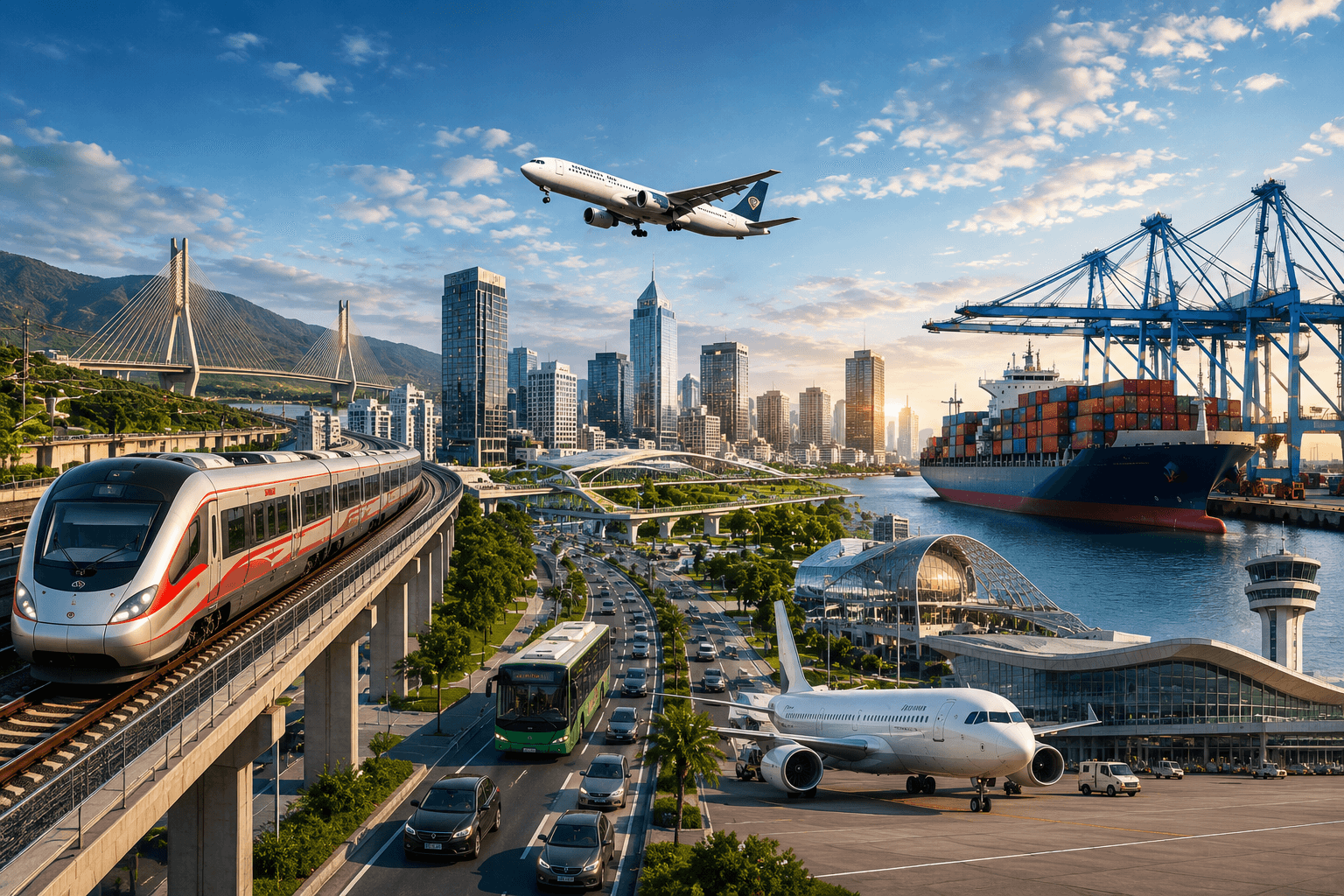
Africa is experiencing a massive infrastructure revolution in 2026. Discover the biggest railway, port, airport, and smart city projects transforming trade, investment, jobs, and economic growth across the continent.
Introduction: Africa's Biggest Transformation Is Happening Right Now
For decades, discussions about global infrastructure often focused on North America, Europe, or East Asia. Today, however, another region is quietly undergoing one of the most significant transformations in the world. Across Africa, governments and private investors are building new railways, expanding ports, modernizing airports, and developing entirely new smart cities.
This transformation is not simply about constructing roads or buildings. It is about creating the foundation for economic growth that could benefit hundreds of millions of people over the coming decades. Efficient transportation systems reduce the cost of doing business, modern ports increase international trade, airports connect countries to the global economy, and smart cities attract technology companies and skilled workers.
In 2026, infrastructure has become one of Africa's biggest competitive advantages. Massive investments are changing how goods move, how businesses operate, and how cities develop. From Egypt's futuristic administrative capital to Nigeria's deep-sea ports and Kenya's expanding railway network, these projects are shaping the future of the continent.
This article explores the biggest infrastructure projects changing Africa in 2026 and examines their long-term economic impact.
Why Infrastructure Matters More Than Ever
Infrastructure is often described as the backbone of an economy because nearly every industry depends on it. A farmer needs reliable roads to transport crops, manufacturers need ports to export products, businesses require stable electricity and internet connections, and travelers depend on efficient airports and rail systems.
Without modern infrastructure, economic growth becomes slower and more expensive.
Africa has one of the world's fastest-growing populations and one of the youngest workforces. As urbanization accelerates, the demand for transportation, housing, energy, and digital connectivity continues to rise. Governments recognize that meeting these demands is essential for attracting investment and creating sustainable growth.
According to organizations such as the African Development Bank, improving infrastructure could significantly increase productivity and regional trade while reducing poverty across many countries.
Modern Railway Projects Connecting Africa
Kenya's Standard Gauge Railway Expansion
Kenya's Standard Gauge Railway (SGR) remains one of East Africa's most important transportation projects. Designed to improve the movement of passengers and cargo, the railway connects key economic centers and supports trade between inland regions and coastal ports.
Before the railway, transporting goods often required long truck journeys that increased costs and caused delays. The SGR has helped reduce transportation time while improving supply chain efficiency.
Businesses benefit through:
- Faster delivery of products
- Lower logistics costs
- Better regional connectivity
- Increased trade opportunities
As additional sections are developed, the railway is expected to strengthen economic integration across East Africa.
Tanzania's Electric Railway Network
Tanzania is investing heavily in a modern electric railway system intended to improve transportation both domestically and regionally.
Unlike older diesel-powered systems, electric railways offer greater efficiency and lower emissions while reducing operating costs over time.
The project is expected to:
- Improve passenger transportation
- Support mining exports
- Strengthen agricultural supply chains
- Connect neighboring countries more effectively
This investment demonstrates how transportation infrastructure can directly support industrial development.
Nigeria's Railway Modernization
Nigeria, Africa's most populous country, continues expanding and modernizing its railway network. Rapid urban growth has placed enormous pressure on road transportation, making rail investment increasingly important.
Modern rail systems help:
- Reduce traffic congestion
- Lower freight costs
- Improve passenger safety
- Connect commercial centers
For businesses operating across Nigeria, improved rail infrastructure can significantly reduce operational expenses while increasing productivity.
Mega Ports Driving International Trade
Lekki Deep Sea Port: Nigeria's Maritime Gateway
One of the continent's most significant infrastructure achievements is Nigeria's Lekki Deep Sea Port.
Built to handle larger cargo vessels than many existing ports, Lekki increases Nigeria's capacity for international trade while reducing congestion at older facilities.
Its economic benefits include:
- Increased import and export capacity
- Faster cargo processing
- Attraction of international shipping companies
- Thousands of direct and indirect jobs
As global trade continues to expand, efficient ports become essential for maintaining competitiveness.
Lamu Port and the LAPSSET Corridor
Kenya's Lamu Port forms part of the ambitious LAPSSET (Lamu Port-South Sudan-Ethiopia Transport Corridor) project, one of Africa's largest regional infrastructure initiatives.
The corridor aims to connect multiple countries through highways, railways, pipelines, and ports.
Its objectives include:
- Expanding regional commerce
- Supporting industrial zones
- Improving exports
- Encouraging foreign investment
If fully realized, the project could transform trade throughout East Africa.
Port Expansion Across the Continent
Countries such as Egypt, Morocco, Ghana, and South Africa are also investing heavily in port modernization.
Modern ports now rely on digital logistics systems, automated cargo handling, and improved customs processes to reduce delays and increase efficiency.
As global supply chains evolve, these investments help African economies compete in international markets.
Airports Becoming Engines of Growth
Ethiopia's Aviation Success
Ethiopia has established itself as one of Africa's aviation leaders through continuous investment in airport infrastructure and the expansion of Ethiopian Airlines.
Modern airports serve purposes far beyond tourism. They facilitate business travel, cargo transportation, and international investment.
Recent developments focus on:
- Larger passenger terminals
- Improved cargo facilities
- Enhanced security technology
- Greater international connectivity
The aviation sector contributes significantly to employment and economic activity.
Egypt's Airport Modernization
Tourism remains a major contributor to Egypt's economy, making airport infrastructure particularly important.
Upgraded airports provide:
- Faster immigration procedures
- Better passenger experiences
- Increased flight capacity
- Enhanced safety systems
Modern airports encourage airlines to expand routes while making travel more attractive for international visitors.
Rwanda's New International Airport
Despite its relatively small size, Rwanda has positioned itself as a business-friendly destination with ambitious infrastructure goals.
Its new international airport aims to become a regional aviation hub by supporting:
- Business travel
- Cargo transportation
- Tourism growth
- International investment
The project reflects Rwanda's broader strategy of becoming a gateway for commerce and innovation in East Africa.
Smart Cities Redefining Urban Development
Egypt's New Administrative Capital
Perhaps one of Africa's most ambitious projects is Egypt's New Administrative Capital.
Built east of Cairo, the city is designed to reduce overcrowding while showcasing modern urban planning and technology.
The city includes:
- Intelligent transportation systems
- Digital government services
- Energy-efficient buildings
- Financial districts
- Residential communities
- Technology infrastructure
Rather than simply expanding an existing city, the project seeks to create an entirely new model for urban development.
Konza Technopolis: Kenya's Silicon Savannah
Konza Technopolis is often described as Kenya's answer to global technology hubs.
The project focuses on attracting:
- Technology companies
- Research institutions
- Universities
- Innovation centers
- Startup ecosystems
The goal is to diversify Kenya's economy by encouraging knowledge-based industries instead of relying solely on traditional sectors.
If successful, Konza could become one of Africa's leading centers for innovation.
Eko Atlantic: Building a New City in Nigeria
Constructed on reclaimed land along the Atlantic Ocean, Eko Atlantic represents one of the world's most ambitious urban development projects.
The city is planned to feature:
- Modern financial districts
- Residential communities
- Commercial centers
- Advanced infrastructure
- Coastal protection systems
Supporters believe it could become a major financial hub serving businesses throughout West Africa.
Digital Infrastructure: The Invisible Foundation
Physical infrastructure is only part of the story. Digital infrastructure is becoming equally important.
Across Africa, investments are increasing in:
- Fiber-optic networks
- 5G technology
- Data centers
- Cloud computing facilities
- Digital payment systems
Reliable internet connectivity enables entrepreneurs, remote workers, fintech companies, and educational institutions to participate in the global digital economy.
As artificial intelligence and automation become more widespread, digital infrastructure will play an even greater role in economic competitiveness.
Renewable Energy Supporting Future Development
Infrastructure development also includes investments in energy.
Many African countries are expanding renewable energy through:
- Solar farms
- Wind power projects
- Hydroelectric plants
- National electricity grids
Reliable electricity supports manufacturing, healthcare, education, and technology industries while reducing dependence on imported fuels.
Countries with abundant renewable resources have an opportunity to build sustainable long-term growth.
The Economic Impact of These Projects
Job Creation
Large infrastructure projects generate employment at multiple levels.
Workers are needed in:
- Construction
- Engineering
- Manufacturing
- Transportation
- Technology
- Maintenance
- Professional services
In addition, surrounding businesses such as restaurants, retail stores, and logistics companies often benefit from increased economic activity.
Increased Regional Trade
Modern transportation systems reduce costs and improve efficiency.
When goods move faster between producers and consumers, businesses become more competitive both domestically and internationally.
Industries benefiting include:
- Agriculture
- Mining
- Manufacturing
- Retail
- Energy
Improved trade networks also strengthen economic cooperation between neighboring countries.
Foreign Investment
International investors often evaluate infrastructure before making major decisions.
Reliable transportation, stable energy supplies, and digital connectivity reduce operational risks and increase profitability.
As infrastructure improves, many African countries become more attractive destinations for multinational corporations and manufacturing facilities.
Urban Growth and Innovation
Smart cities create environments where businesses and talented professionals can thrive.
Modern infrastructure supports:
- Technology startups
- Financial services
- Research institutions
- Higher education
- Healthcare innovation
These ecosystems encourage long-term economic diversification rather than dependence on a limited number of industries.
Challenges That Still Need to Be Addressed
Despite impressive progress, several obstacles remain.
Some projects face:
- High financing costs
- Debt sustainability concerns
- Political instability in certain regions
- Climate-related risks
- Delays in implementation
- Long-term maintenance expenses
Successfully managing these challenges will determine whether infrastructure investments deliver their full economic potential.
What the Future Looks Like Beyond 2026
Experts expect Africa's infrastructure development to accelerate over the next decade.
Future priorities are likely to include:
- High-speed rail networks
- AI-powered traffic management
- Smart energy grids
- Green transportation
- Digital government services
- Expanded regional trade corridors
Combined with a young population and growing consumer markets, these investments could make Africa one of the world's fastest-growing economic regions.
Frequently Asked Questions (FAQ)
What are the biggest infrastructure projects in Africa in 2026?
Some of the most significant projects include Kenya's Standard Gauge Railway expansion, Nigeria's Lekki Deep Sea Port, Egypt's New Administrative Capital, Tanzania's electric railway network, and Rwanda's new international airport.
Why is infrastructure important for Africa's economy?
Infrastructure improves transportation, reduces business costs, increases trade, attracts foreign investment, creates jobs, and supports long-term economic growth.
What is a smart city?
A smart city uses advanced technology and data-driven systems to improve transportation, energy management, public services, communication, and overall quality of life.
How do ports and railways help economic development?
Efficient ports and railways allow goods to move more quickly and at lower costs, making businesses more competitive and encouraging international trade.
Is Africa becoming a major investment destination?
Many analysts believe so. Improvements in infrastructure, digital technology, renewable energy, and regional trade agreements are increasing investor interest across the continent.
Conclusion: Building the Foundation for Africa's Next Economic Era
The infrastructure projects transforming Africa in 2026 represent far more than construction initiatives—they are investments in the continent's future. Modern railways are connecting markets, expanded ports are strengthening global trade, upgraded airports are increasing tourism and business opportunities, and smart cities are creating environments designed for innovation and sustainable growth.
While financing, governance, and climate challenges remain, the overall direction is clear. Countries across Africa are laying the physical and digital foundations needed for long-term prosperity. If these investments continue and are managed effectively, the coming decade could see Africa emerge as one of the world's most dynamic regions for business, technology, and economic development.
Reader discussion
Join the conversation
Share your thoughts on this article. Comments are stored in MongoDB and appear instantly below.